
Little Saint James Island in the U.S. Virgin Islands — the private island at the center of Epstein's trafficking operation, one of four properties controlled by the trust
The System
Five interlocking components — financial incentives, governance control, witness suppression, beneficiary alignment, and prosecutorial inaction — produced one outcome: the evidence is in the public record, the accountability is not.
The Epstein 2014 Trust was not an estate plan. It was an operating system.
Over three versions — November 2014, May 2015, September 2015 — the trust assembled five interlocking components: a financial architecture that paid for silence, a governance structure controlled by conflicted insiders, a witness control mechanism that penalized cooperation with law enforcement, a beneficiary arrangement that aligned the wealthiest inheritors with the greatest criminal exposure, and a prosecution apparatus that had the evidence to disrupt all of it and chose not to.
These were not five separate failures. They were one system, designed to produce exactly the outcome it produced: the evidence is in the public record, the accountability is not.
This is what the documents show.
The Five Parts
I. The Trustee Who Signed Three Times
Jes Staley signed the trust as one of three trustees on November 18, 2014 — thirteen months before becoming CEO of Barclays. He signed again on May 1, 2015. He signed a third time in September 2015, ratifying the amendment that added witness control provisions.1
No resignation document has been found in 1.38 million EFTA documents. The prosecution memo documents a victim's account that Staley raped her during a directed massage at Jeffrey Epstein's New York residence, corroborated by JPMorgan communications.2 He was never charged.
II. The Family That Inherited Everything
Celina Edith Dubin received all four major Epstein properties — Paris, New York, Little St. James, New Mexico — plus $20 million in operating endowments and 100% of the residuary estate. Total estimated inheritance: $250 million or more.3
Her mother, Eva Andersson-Dubin, was the first successor trustee and contingent beneficiary of the entire estate. Her father, Glenn Dubin, appears on page 57 of the prosecution memo — Ghislaine Maxwell directed a victim to engage in sex acts with him.4 The family with the most to inherit was the family with the most to hide.
III. The Dead Man's Switch
The September 2015 amendment added three mechanisms that transformed employee bequests into leverage: a one-year employment cliff requiring continued service after Epstein's death, two-year conditional bequests for two redacted employees worth $200,000 each, and a "misconduct" forfeiture trigger whose interpretation was left to the trustees.5
These provisions did not need to be enforced to function. They only needed employees to believe they would be.
IV. The Man With Every Key
Darren Indyke was Epstein's attorney, trustee, $5 million beneficiary, recipient of complete debt cancellation, indirect beneficiary of a $3 million spouse provision, nominee property holder, and — after the final amendment — the sole gatekeeper for trust modifications. Minimum documented benefit: $8.25 million.6
He told at least one employee not to talk to the police.7 The person giving this instruction controlled whether the employee's bequest would be paid.
V. The Case That Wasn't
The December 2019 prosecution memo documented 38 victims — 24 of them minors. It contained testimony, financial records, photographs, and accounts of obstruction. Five individuals were analyzed for charges. Only Ghislaine Maxwell was arrested.8
A separate three-year investigation of Leon Black accumulated bank statements, multiple victims with matching accounts, and forensically authenticated journals naming more than 30 abusers. The case handler admitted: "I did not write anything up on Leon Black."9
The Convergence
These five components were not parallel. They were connected through three structural relationships.
First: Indyke was the central node. He appears in every thread with an active role — administering the witness control provisions (Thread 03), accumulating $8.25 million in conflicted benefits (Thread 04), instructing employees to stay silent while controlling their bequests, and co-executing the estate during the period when prosecutors were deciding whether to bring charges (Thread 05). No other individual bridges the financial architecture, the operational obstruction, and the governance structure.67
Second: the trust and the prosecution memo were never combined. The trust documents sit in Dataset 10. The prosecution memo sits in Dataset 12. The trust reveals the financial architecture — who inherited what, who controlled the bequests, how witness silence was incentivized. The prosecution memo reveals the criminal evidence — who raped whom, who directed sexual contact, who obstructed investigations. A prosecutor reading one would not see the other. This analysis is the first to combine them systematically.
Third: the Dubin family connected inheritance to exposure. The family that stood to receive $250 million from the estate included a member documented in the same prosecution memo for criminal conduct. The successor trustee — next in line to control the witness control mechanisms — was married to the man with Tier 1 evidence exposure. Whether this alignment was engineered by Epstein or emerged from a personal relationship, it created a structural condition in which the Dubins could not challenge the estate without scrutinizing the conduct that generated it.34
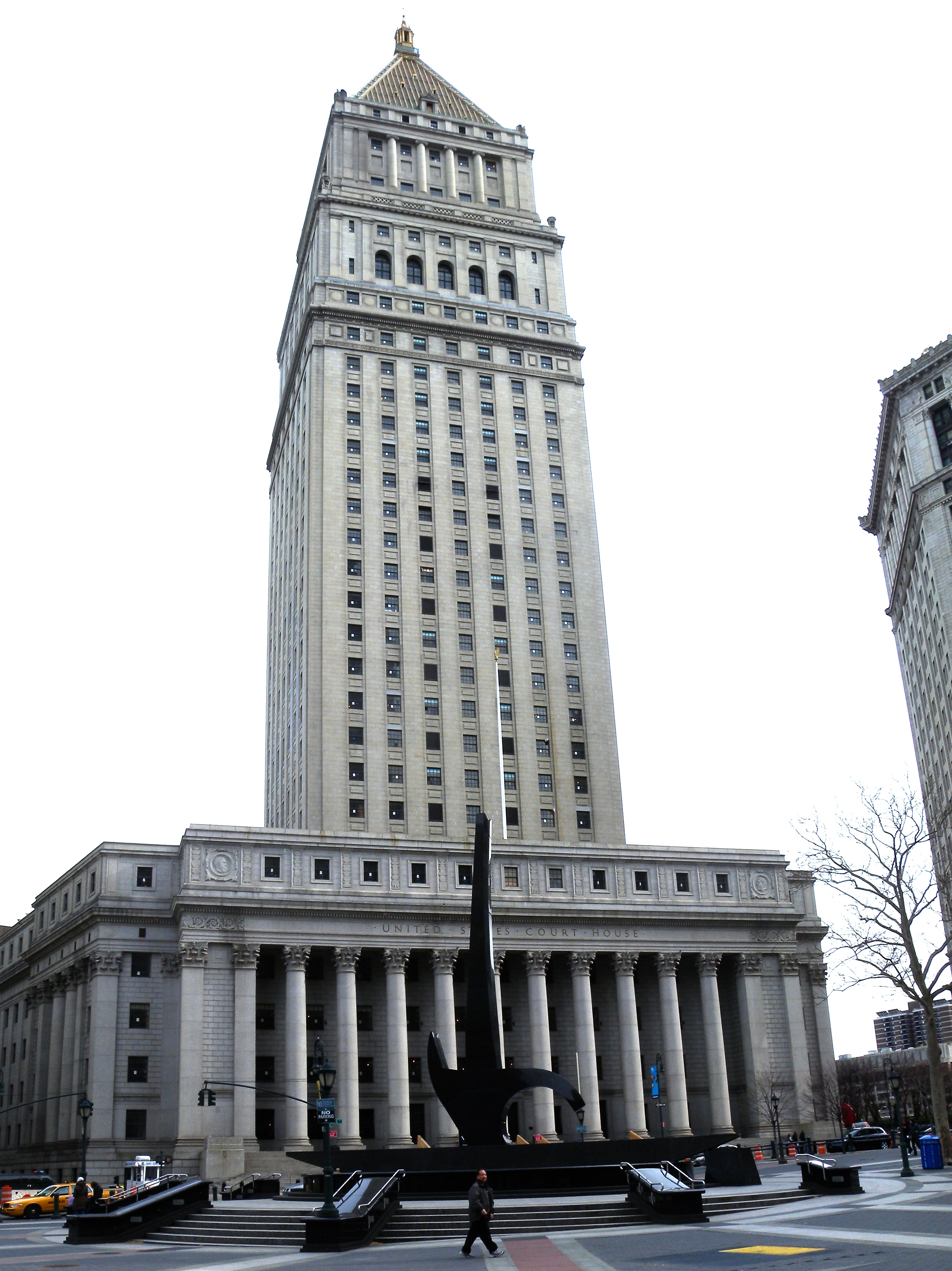
Evidence Without Consequence
Across all five threads, the same pattern recurs:
| Evidence | Source | Consequence |
|---|---|---|
| Jes Staley — rape during directed massage, JPMorgan corroboration | EFTA02731082, p. 32 | No charges |
| Leon Black — sexual assault, 3+ victims, forensic journals | EFTA02731082 + DS12 | No charges |
| Glenn Dubin — Maxwell-directed sexual contact | EFTA02731082, p. 57 | No charges |
| Darren Indyke — told employee not to talk to police | EFTA02731082, p. 41 | No charges |
| Evidence destruction — computers, scheduling directories | EFTA02731082, pp. 40-41 | No charges |
| $250K payment timed to Miami Herald series | EFTA02731082, pp. 51-52 | No charges |
| Trust witness control provisions | EFTA01266427 | Never analyzed |
| 24 minor victims, 14 adult victims | EFTA02731082 | One conviction |
The Redacted Pages
The prosecution memo is 86 pages. The first 67 document what happened — 38 victims, physical evidence, financial records, obstruction. The last 18 contain the charging analysis — what the government proposed to do about it.
Those 18 pages are 98% redacted.8
The structural skeleton survives: five subjects analyzed in Section IV. Three are redacted. Lesley Groff's name is visible but her one-page analysis is blacked out. Maxwell's section preserves a single footnote confirming prosecutors anticipated transportation-of-minors charges.8
Everything else — the statute of limitations analysis, the evidence assessments, the charging recommendations — is hidden behind deliberative process privilege and grand jury secrecy. The public can read, in granular detail, what happened to 38 victims. What the government proposed to do about it is invisible.
The System
The word "system" is not a metaphor. It describes a documented architecture in which five components — financial incentives, governance control, witness suppression, beneficiary alignment, and prosecutorial inaction — produced a coherent outcome.
The financial incentives were calibrated. Every employee, from the $35,000 housekeeper to the $10 million inner-circle associate, had a financially specific reason not to cooperate with authorities. The governance was concentrated. One person — Darren Indyke — controlled the bequests, the amendment power, and the legal advice. The witness control was structural. The employment cliff and the no-contest clause automated what cash payments and attorney instructions had served during Epstein's lifetime. The beneficiary arrangement was self-reinforcing. The family with the most to inherit had the most to lose from scrutiny.
And the prosecution apparatus — which had the evidence, the jurisdiction, and the legal tools to disrupt it — declined to act at every stage documented in the record.
Whether this constitutes a designed conspiracy or a series of individually rational decisions producing a collectively irrational outcome is a question the documents cannot answer. The trust provisions were drafted by lawyers. The prosecutorial decisions were made by career prosecutors. The financial arrangements were executed by accountants and bankers. Each actor may have had legitimate professional reasons for their choices.
But the outcome is the same either way: the evidence is in the public record. The accountability is not.
This story is the capstone synthesis of the EFTA investigation. For the individual threads that compose it, see the source case files: [Staley](/case-files/staley-trustee-banker), [Dubin](/case-files/dubin-architecture), [Witness Control](/case-files/witness-control-mechanisms), [Indyke](/case-files/indyke-conflicts-of-interest), [Prosecutorial Failure](/case-files/prosecutorial-failure). For the complete analytical framework, see the [Master Intelligence Brief](/case-files/master-intelligence-brief).

Get help building custom platforms, AI-powered tools, and data-driven applications for your business or projects.
This article is based on documents released under the Epstein Files Transparency Act (EFTA). All claims are sourced to specific EFTA documents identified by Bates number. Entity tier classifications reflect evidence strength, not legal determinations.
Research and initial drafting assisted by Claude AI (Anthropic). All articles are reviewed, fact-checked, and edited by Derek Emsbach.
Continue Reading
Related investigations

The Heirs With the Most to Hide
Celina Dubin inherited essentially the entire Epstein estate — four properties, $20M in operating endowments, 100% of the residuary. Her mother was the successor trustee. Her father appears on page 57 of the prosecution memo.
The Case That Wasn’t
The prosecution memo documented 38 victims and multiple perpetrators. The Leon Black investigation accumulated three years of evidence. In both cases, the institutional answer was the same: decline.

The Trustee With No Exit
Jes Staley signed the Epstein trust three times, retained Epstein as a banking client after his conviction, and was documented by prosecutors as having raped a victim during a directed massage. No resignation from the trust has been found. No charges have been filed.
Open-source research databases for the Epstein corpus
Community-built SQLite research databases covering concordance metadata, document alterations, image analysis, and handwriting records across 1.4M EFTA documents.
View on GitHub →